Bubbles are beautiful
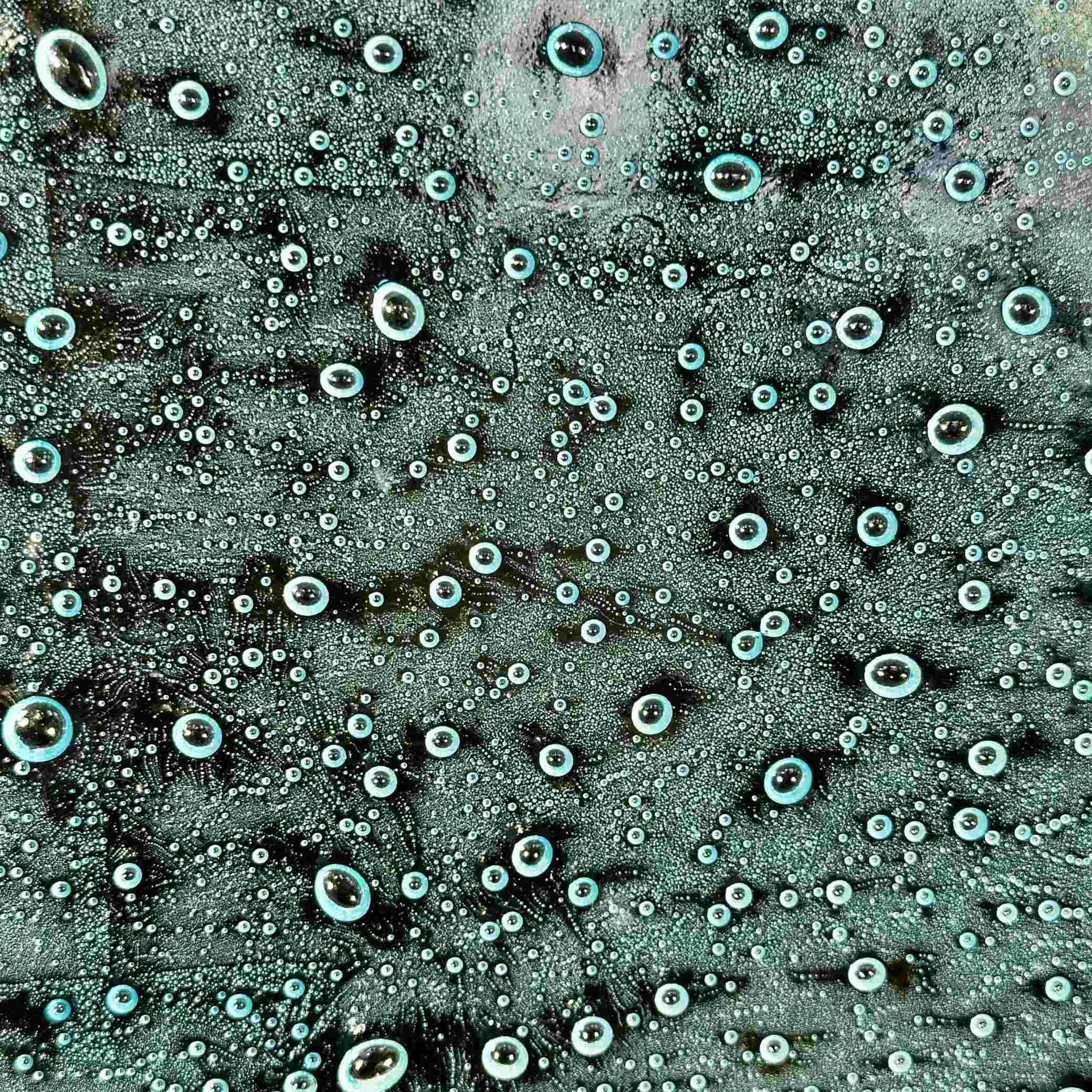
Bubbles can be beautiful but can be hard to intentionally produce during kiln firing.
Creating intentional glass bubbles can sometimes be difficult
Kiln fired glass and bubbles are like sunshine and warmth. You can’t separate them. Even the smallest of bubbles called “seeds” are most often present in kiln-fired glass art. Seeds add to the flavor of uniqueness and individuality beauty. Isn’t that what “art” is all about?
But what does a glass artist do to create larger bubbles that are intentionally desired- sometimes that is not easy to do.
There are a few considerations during the kiln firing that help create bubbles - Entrapped Air, Moisture and Chemical Reactions.
Entrapped Air is normal during the kiln firing and is controlled by a heat segment called a “bubble squeeze” during the firing process. For example, slowly raising the kiln temp to 1325 degrees and “holding” for a period of minutes, will help the bubbles dissipate. This “bubble segment” can be controlled to decrease or increase the bubble content. This is most common.
Moisture can sometimes be present inside the kiln. Molds or inclusions can create steam during the kiln firing which is usually not desired. Normal kiln firing always wants dry, dry, dry.
Chemical Reactions - this is where science meets glass and can be a secret to bubble creation. Interactions between different glass components can produce “gas” which become bubbles. Yes, there is something inside that bubble called “gas”.
Bubbles are beautiful. Such as this Sea Foam Glass Bowl